What to Expect During Vent Cleaning in Fort Lauderdale: A Step-by-Step Walkthrough
When ductwork goes uncleaned in a humid coastal city, the buildup inside is rarely just dust. In Fort Lauderdale, where outdoor humidity routinely pushes past 80 percent and the AC runs for the better part of the year, moisture-laden air cycles through your vents constantly. Over time, that moisture binds dust and debris into a dense, sticky layer that restricts airflow, strains your system, and can quietly affect the quality of air your family breathes every day. Most homeowners don’t notice the gradual change until they schedule a cleaning and see what comes out.
Understanding exactly what happens during a professional vent cleaning appointment removes the guesswork and helps you recognize whether the work was done thoroughly. This walkthrough covers every stage of the process as it applies to Fort Lauderdale homes, from the technician’s arrival through the final system check. If you’re still weighing whether the service makes sense for your situation, our guide on Fort Lauderdale duct cleaning and coastal humidity explains why the local climate makes routine cleaning especially important here.
Before You Start: What to Have Ready
- Clear access to all vents and registers. Move furniture, rugs, or stored items away from supply and return vents in every room. Technicians need to reach each one without obstruction.
- A clear path to your air handler. The air handler (typically in a closet, attic, or garage in Fort Lauderdale homes) is the central connection point for the cleaning equipment. Make sure the area around it is accessible.
- Your current air filter. Leave it in place, the technician will inspect it as part of the assessment and replace it at the end of the job.
- Note any problem areas. If certain rooms feel stuffy, smell musty, or have vents that seem to blow weakly, mention these before work begins. Fort Lauderdale’s humidity can concentrate moisture issues in specific zones.
- Pets and small children secured. The high-powered vacuum equipment is loud, and technicians will be moving through every room. A quiet space for pets reduces stress for everyone.
- A rough idea of your system’s age and last service date. Older systems common in Fort Lauderdale’s mid-century neighborhoods may have flex duct or original metal ductwork that requires a slightly different approach.
Step 1: Conduct a Pre-Cleaning Inspection
A thorough job starts before any equipment is switched on. The technician walks through your Fort Lauderdale home to locate every supply vent, return vent, and register, counting them and noting their condition. They’ll check the air handler cabinet, inspect the visible sections of ductwork for damage or disconnected joints, and assess the existing filter. In many Fort Lauderdale homes, especially those built in the 1960s through 1980s, inspections often turn up flex duct that has partially collapsed or metal duct joints that have separated over decades of thermal expansion. Catching these issues before cleaning begins means they can be addressed as part of the visit rather than discovered after the fact. The technician should share what they find with you before proceeding.
Step 2: Set Up the High-Powered Vacuum Collection System
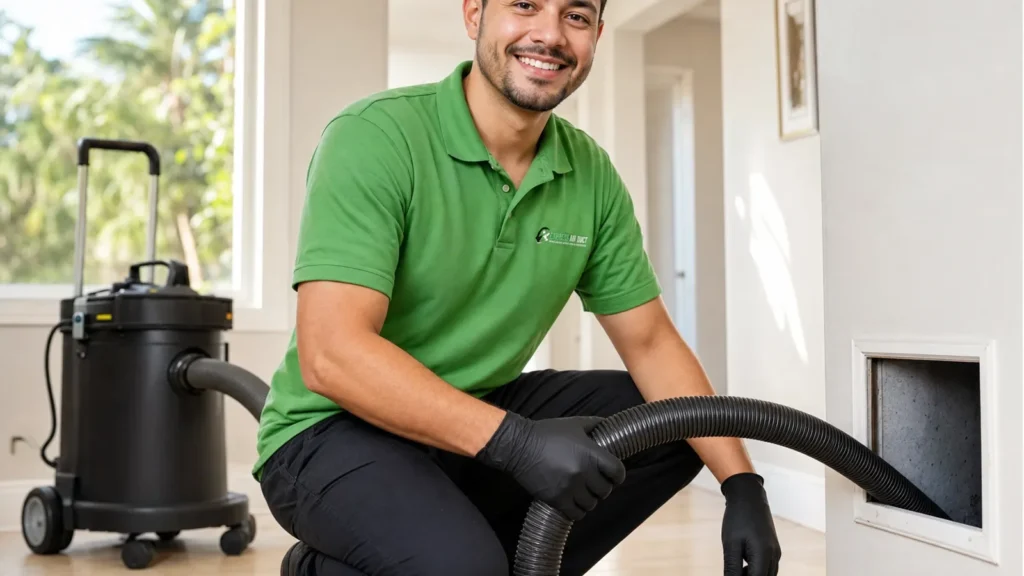
The core of any professional vent cleaning is the negative-pressure vacuum system. A large, truck-mounted or portable industrial vacuum unit is connected directly to your main trunk line, typically through an access point cut near the air handler or through a large return vent. This creates negative pressure throughout the entire duct system, meaning that when debris is dislodged in any part of the network, it gets pulled toward the collection unit rather than blown into your living space. NADCA (the National Air Duct Cleaners Association) guidelines call for this source-removal method as the standard approach, and it’s particularly important in Fort Lauderdale where the debris inside ducts often includes compacted, moisture-bound material that won’t move with a simple brush alone. The vacuum runs continuously throughout the cleaning process.
Step 3: Agitate and Dislodge Debris in Every Supply Duct
With the vacuum system holding negative pressure, the technician works through each supply duct branch systematically. Flexible rotary brushes, compressed air whips, or pneumatic agitation tools are fed into each duct run to break loose the buildup along the duct walls. In Fort Lauderdale’s climate, this layer is often denser than what technicians encounter in drier regions, because humidity causes dust and particulates to clump and adhere rather than stay loose. Each supply vent is sealed with a cover or plug while the adjacent ducts are being cleaned, directing the suction and keeping dislodged material moving toward the collection unit. The technician works from the farthest points of the system back toward the air handler, following the direction of airflow.
Step 4: Clean the Return Air Ducts and Plenums
Return ducts pull air back from your living spaces into the air handler, which makes them a significant collection point for household dust, pet dander, and in Fort Lauderdale homes, the fine particulates that drift in from open windows and doors during the rainy season. The return plenum, the large chamber that connects the return ductwork to the air handler, is often the dirtiest section of the entire system. The technician cleans each return duct branch using the same agitation-and-vacuum method, then addresses the plenum directly. In some Fort Lauderdale homes, especially those with returns located in hallways or living areas rather than dedicated closets, return vents accumulate debris quickly and may require more attention than the supply side.
Step 5: Clean the Air Handler Components
The air handler itself, not just the ducts attached to it, is part of a complete cleaning. The technician opens the cabinet and cleans the blower wheel, blower housing, and drain pan. The evaporator coil, the component responsible for cooling and dehumidifying the air, is inspected and surface-cleaned as needed. In Fort Lauderdale, the evaporator coil and drain pan are particularly prone to biological growth because they stay cold and wet during normal operation. A clogged or dirty drain pan can overflow, causing water damage inside the air handler cabinet and contributing to moisture problems throughout the duct system. Addressing the air handler as part of the cleaning ensures that a freshly cleaned duct system isn’t immediately recontaminated by a dirty blower wheel pushing debris back into the ducts. For more on keeping moisture from becoming a recurring problem in your system, this guide on keeping AC ducts dry in Fort Lauderdale covers practical steps between professional visits.
Step 6: Sanitize or Apply an EPA-Registered Antimicrobial Treatment (If Applicable)
After the physical debris is removed, some homeowners in Fort Lauderdale opt for an antimicrobial treatment applied to the interior duct surfaces. Because of the city’s persistent humidity, conditions inside ductwork can favor biological growth even in systems that have been recently cleaned. An EPA-registered treatment, applied as a light fog or spray, can help inhibit regrowth on duct surfaces. This step is not mandatory for every home, and a responsible technician will explain the options and let you decide based on what the inspection revealed. If the pre-cleaning inspection or the cleaning process itself revealed visible biological growth inside the ducts or air handler, this step becomes more relevant. For a deeper look at what growth inside vents actually looks like and when it warrants attention, this article on mold in AC vents in Fort Lauderdale covers the signs and next steps.
Step 7: Replace the Air Filter and Reseal All Access Points
Once all duct branches, the plenum, and the air handler components have been cleaned, the technician replaces your air filter with a new one. In Fort Lauderdale, a filter with a MERV rating between 8 and 13 is generally appropriate for residential systems, offering a balance between particle capture and adequate airflow. Filters with very high MERV ratings can restrict airflow in systems not designed for them, which puts additional strain on the blower motor. Any access holes cut into the ductwork to connect the vacuum system are sealed with sheet metal patches and mastic or foil tape, restoring the system’s integrity. All vent covers and registers are reinstalled securely. The technician should walk you through what was done and show you the access point repairs before leaving.
Step 8: Restore Power and Verify System Performance
With everything reassembled, the technician restores power to the air handler and runs the system through a full cycle. They check airflow at each supply vent to confirm that the cleaning improved distribution and that no duct branches were accidentally blocked or disconnected during the process. The thermostat is cycled, and the system is observed for any unusual sounds that might indicate a loose component inside the air handler. In Fort Lauderdale homes, where the AC may run for eight to twelve hours a day during summer, confirming that the system is operating correctly before the technician leaves is an important final step. You should feel noticeably improved airflow at vents that were previously weak, and the air coming through should smell clean rather than musty.
What Fort Lauderdale’s Housing Stock Means for Your Cleaning Appointment
Fort Lauderdale’s residential neighborhoods span a wide range of construction eras, and the type of ductwork in your home directly affects how the cleaning process unfolds. Homes built before the 1980s in areas like Tarpon River, Sailboat Bend, and parts of Coral Ridge often have original galvanized metal ductwork, which is durable but can develop interior rust and mineral deposits over decades of exposure to humid air. These systems may require more aggressive agitation to dislodge compacted debris.
Homes built from the 1980s onward, and many that have undergone duct replacement since then, typically use flexible duct, which is lined with an inner plastic core and insulated on the outside. Flex duct is prone to sagging, kinking, and tearing, and Fort Lauderdale’s attic temperatures, which can exceed 130 degrees Fahrenheit in summer, accelerate the degradation of the inner liner. A good technician will note any damaged flex duct sections during the inspection and flag them for repair, since a torn liner allows conditioned air to escape into the attic and allows attic air, which is hot and humid, to enter the duct system.
Coastal neighborhoods closer to the Intracoastal Waterway and the beach, including areas like Harbor Beach and Lauderdale Shores, also tend to see higher salt-air exposure, which can contribute to corrosion on metal duct components and fasteners over time. If your home is in one of these areas, mentioning this to the technician during the pre-cleaning walkthrough helps them pay extra attention to joint integrity.
When to Call a Professional in Fort Lauderdale
Some aspects of vent and duct maintenance are safe for homeowners to handle, such as wiping down vent covers, changing filters on schedule, and keeping the area around vents clear. But the cleaning process itself, specifically the source-removal vacuum method, agitation of duct interiors, and air handler component cleaning, requires professional equipment and training. Attempting to clean ducts with a household vacuum and a brush will dislodge debris without capturing it, redistributing particulates into your living space rather than removing them.
In Fort Lauderdale, calling a professional is especially warranted when:
- You notice a musty or stale odor when the AC runs, which can indicate moisture-related buildup in the ducts or air handler.
- Airflow feels uneven across rooms, with some vents blowing noticeably weaker than others.
- You can see visible debris, dust buildup, or discoloration inside vent openings when the cover is removed.
- Your home has experienced a water intrusion event, such as a roof leak, flooding, or condensate line overflow, that may have introduced moisture into the duct system.
- It has been three or more years since the last professional cleaning, or you have no record of the ducts ever being cleaned.
- You’re moving into a previously owned Fort Lauderdale home and don’t know the duct maintenance history.
If you’re in the process of finding a qualified technician, this guide to choosing Fort Lauderdale duct cleaners covers what credentials, equipment, and process standards to look for before you book.
Frequently Asked Questions
How long does a vent cleaning appointment typically take in a Fort Lauderdale home?
Most single-family homes in Fort Lauderdale take between two and four hours, depending on the size of the home, the number of vents, and the condition of the ductwork. Larger homes or systems with significant buildup may take longer. A technician should give you a reasonable time estimate after the pre-cleaning inspection.
Do I need to be home during the cleaning?
It’s strongly recommended that an adult be present for the entire appointment. The technician will need to walk through every room, may have questions during the inspection, and should review findings with you before and after the work. Being present also lets you confirm that all vents are cleaned and all access points are properly resealed before the technician leaves.
Will the cleaning make a mess in my home?
A properly executed source-removal cleaning should not leave debris in your living space. The negative-pressure vacuum system captures dislodged material before it can enter the room. Technicians typically place drop cloths near the air handler and wear shoe covers. If a cleaning is leaving visible dust throughout the home, the vacuum containment is not working as it should.
How soon after cleaning will I notice a difference in airflow?
Most Fort Lauderdale homeowners notice improved airflow and a fresher smell from their vents within the first full cycle after the system is restarted. If certain rooms were receiving weak airflow due to buildup restricting the duct, the improvement in those areas can be noticeable immediately.
How often should Fort Lauderdale homes have their ducts professionally cleaned?
Given Fort Lauderdale’s year-round humidity and the near-constant operation of residential AC systems, many homes benefit from professional cleaning every two to three years rather than the longer intervals sometimes suggested for drier climates. Homes with pets, recent water intrusion events, or older ductwork may warrant more frequent attention. Understanding how Fort Lauderdale’s coastal humidity affects ductwork can help you set a realistic maintenance schedule for your specific situation.
What a Thorough Cleaning Looks Like
By the time a professional vent cleaning is complete in your Fort Lauderdale home, every supply and return duct branch will have been agitated and vacuumed, the air handler components will be clean, a new filter will be in place, and the system will be running and verified. The technician should be able to walk you through what was found during the inspection, what was cleaned, and whether any repairs or follow-up steps are recommended.
Knowing what to expect makes it easier to evaluate the quality of the work and ask informed questions. If you’re ready to schedule a professional cleaning or want to talk through what your Fort Lauderdale home’s duct system might need, reach out to Express Air Duct Cleaning Fort Lauderdale to get started.